
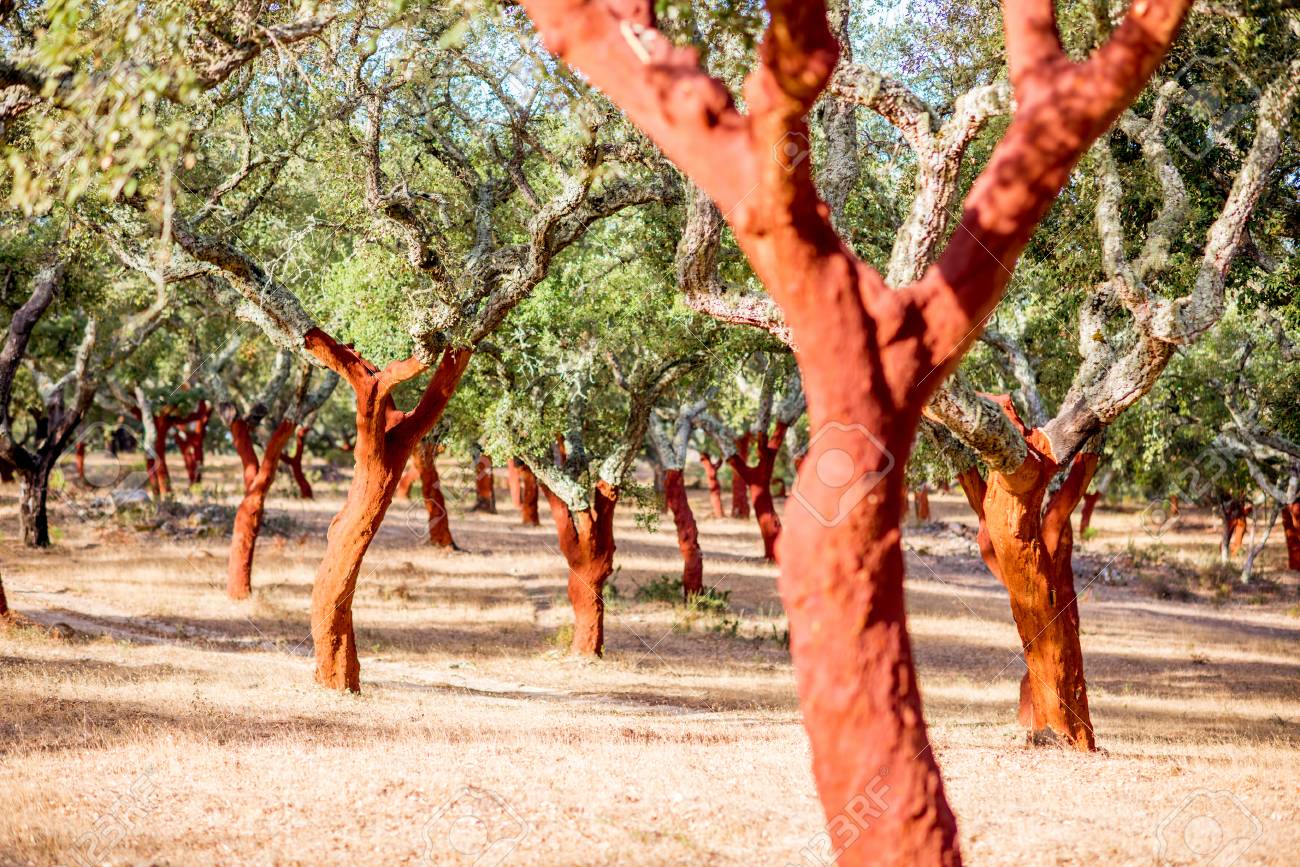
The Cork oak (Quercus suber) is a remarkable tree native to the western Mediterranean region including Portugal, and it is the only tree species whose bark can be harvested without harming the tree. It is renowned for its unique bark, which is harvested to produce cork, a versatile and sustainable material. Cork oaks are medium-sized evergreen trees with a rugged bark that can be reddish or grayish in color.
Every 9 to 12 years, the thick cork bark is skillfully stripped from the tree without causing harm, allowing it to regenerate. Cork possesses remarkable properties due to its cellular structure, making it lightweight, elastic, and resistant to moisture, rot, and fire. Apart from its primary use as bottle stoppers, cork finds applications in flooring, insulation, and consumer products.
Cork oak forests are of immense ecological importance, providing habitats for various species, contributing to soil conservation, and combating desertification. Cultivated primarily in Portugal and Spain, cork oaks thrive in the Mediterranean climate. With their longevity of up to 500 years, cork oaks exemplify sustainability, making them a vital part of both the natural and economic landscape.
Cork from Portugal is considered special because of its unique qualities and the way it is harvested. Portugal is the world’s leading producer of cork, with approximately 50% of the world’s cork supply coming from the country.
Cork from Portugal is highly valued due to its high quality. It is denser and has a more uniform cellular structure than cork from other regions, making it more durable and resistant to wear and tear. It also has a higher level of elasticity, making it ideal for use in a wide range of products, including wine bottle stoppers, flooring, and insulation.
In addition to its quality, the cork forests in Portugal are also ecologically significant, as they support a diverse range of plant and animal species. The traditional cork harvesting methods used in Portugal are also environmentally sustainable, as they do not require the cutting down of trees and the bark regenerates after harvesting.

A WordPress Commenter
Hi, this is a comment.
To get started with moderating, editing, and deleting comments, please visit the Comments screen in the dashboard.
Commenter avatars come from Gravatar.